Surrealism Art – The Foundings of a Movement

Categories: Surrealism Art
Comments: No Comments
Published on: February 7, 2013


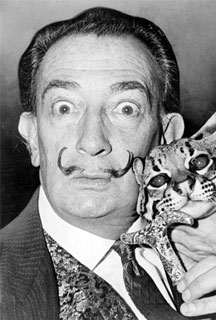
Have you ever wondered what is the relationship with that painting of Mona Lisa with a thin mustache painted over it, and the surrealist artist, Salvador Dali who is notoriously known, not just for his melting clocks, but for his curious looking mustache? The answer is that Marcel Duchamp’s Mona Lisa with a mustache, titled “L.H.O.O.Q” arguably made it possible for the thin mustached Dali to become famous.

Duchamp’s “Artbutcher” is perhaps one of the best known pieces of the dadaist movement; a movement that came out of the depression and the desperation caused by World War I. The dadaist artists manifested their frustration with the post-WWI conditions and their antiwar anti-rational through their anti-art masterpieces. A very good example of the anti-art pieces is “the urinal”, also a piece by Duchamp. In an exhibition of his works, he simply took a regular urinal and displayed as art. The dadaists celebrated the everyday objects as art, for who says what is made by the hands of the people most affected by the wars are anything less than art? And as the usual course of human philosophy and human instinct goes, out of outrage and depression, out of anger and desperation, rebels and revolutions rise to lead the man kind to new grounds of thoughts and ideas and perhaps give a glimpse of hope and thus surrealism art came to be.

 The Psychology of Art

Surrealism art is a dose of reality mixed with unrealistic and surprising elements to give birth to imaginative art pieces that cause one to think, and to wonder and have to search for the meanings beyond the imagery presented through a painting, a play, a movie, or a novel. The surrealists married Freud’s ideas of the subconscious mind and Karl Marx’s faith that the human psyche had the power to spur on revolutions by revealing the contradictions in our world, and gave birth to a new movement, which came to be known as surrealism art. Surrealism art was officially founded in 1924 when Andre Breton presented Le Manifeste du Surrealism in which he wrote: “Psychic automatism in its pure state, by which one proposes to express … the actual functioning of thought.” He suggested that the artist should set his psyche free to gain access to, and express the subconscious. The surrealist arts might at times look like a masterful demonstration of fanciful child’s imagination and yet the surrealist artists insisted that each painting was a window to the depth of the human philosophy and a segue to better understanding the ever expanding world of the human’s subconscious.

The Early Forms

In the beginning, surrealism art was quite heavily only seen among the literary forms of art such as plays, literature, movies and theater. Fredrico Garcia Lorca, Andre Breton, Benjamin Peret and Pierre Reverdy and among the well-known literary artists of this period. While the movement started with the literary arts, it did not stay exclusive to that group. The potential for paintings were very soon explored by different artists and Andre Breton was a head cheerleader for those artists who were willing to try out the surrealistic ideas presented in his manifesto.

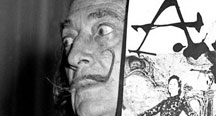
When speaking of surrealist artists, it is common for one to remember first, and foremost, the Spanish artist, Salvador Dali. Salvador Dali did start his surrealistic work with a group of artists in France, but he was expelled from the group, or according to his slightly egoistic self, he “chose to leave the group”, and returned to Spain. Dali believed individualistic imagination and lack of influence of one artist to another to be an important part of being unique. He was quite imaginative and was not shy to explore his ideas not only through etudes, but also through sculpture or even hiring men and women to pose and be painted on the way he wanted to later paint them on his canvas. He is considered one of the most skilled artists of the surrealism era.

More Than Just Dali

A lesser known artist, with very famous and well-known works, is Magritte. The Belgian artist was quieter and less controversial than Dali, and his paintings seemed to have especially one thing in common: faceless men and women. Magritte almost never painted a face on his subjects. One of his most famous works, is of a suited man, without a head, with a round top-hat floating above his shoulders where his head should be. He covered the faces of the men in his paintings with apples, umbrellas, shadows, etc. It is said that the lack of faces in his paintings are linked to a childhood trauma.

In the visual surrealistic arts, after painting comes photography the last area explored by the surrealists. The American painter and photographer, Man Ray, is arguably the most influential of the surrealist photographers. One could, of course, easily argue that manipulating photographs after they are taken can hardly have anything to do with the subconscious, yet we should remember that Man Ray was a painter first. He, in a way, painted what he wanted to paint with a camera and special effects. The most well-known of his works, Eyes, are the eyes of a girl with three dew like tear drops beneath them.

The surrealism art movement is thought to have consisted of a pack of tightly associated group of men. There are, however, many women artists whose work whilst no less brilliant than their male counterparts they failed to get noticed as the limitations for their gender posed a great number of restrictions to their growth. Among the female artists one can name Eileen Agar who experimented with different mediums and visual arts, such as painting, sculpture and photography, and Emmy Bridgewater who, while a surrealist, got very close to abstract expressionism.

The surrealist art movement is thought to have been the most influential art style of the twentieth century. It had a very heavy influence on the abstract expressionist movement and artists such as Jackson Pollack. Now do you know what the mustaches on Duchamp’s “L.H.O.O.Q.”, and Salvador Dali have with the bright paints thrown on a canvas by Jackson Pollack?


Archives
Categories

Welcome , today is Saturday, May 18, 2013